The Lens at the Counter: How America’s Omakase Chefs Really Feel About Your Camera Roll
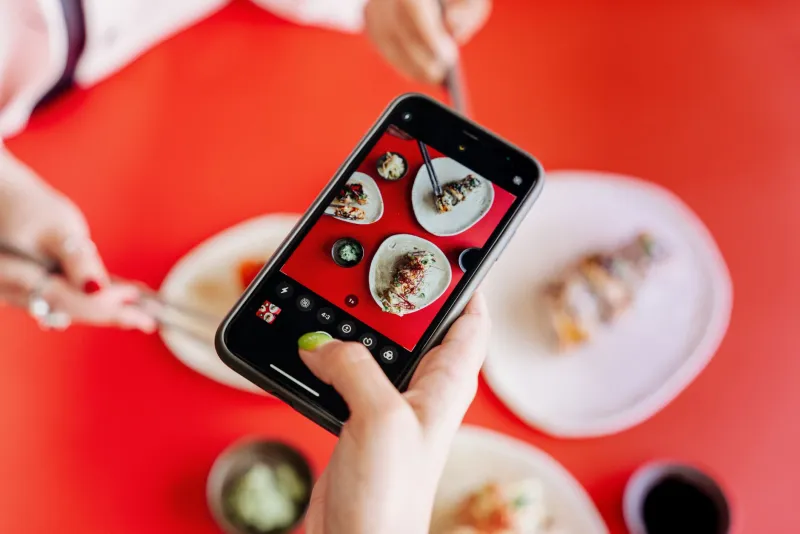
Photo: diner taking smartphone photo of sushi at omakase counter, via img.freepik.com
At a nine-seat counter on a recent Thursday, the first piece of nigiri lands. Before the chef can step back, three phones rise in unison. One diner hovers at eye level, another taps the flash by accident, and a third starts a video that will definitely include the chef’s forearm and a very unflattering angle of the wasabi. The fish is beautiful. The moment is gone. And the chef, smiling tightly, waits.
Omakase is built on timing: the rice at body temperature, the fish sliced to order, the pace set by the itamae. A phone does not automatically ruin that. But it changes the room. In 2026, as chef’s-choice counters multiply from Brooklyn to Austin to Seattle, the question is no longer whether diners will photograph dinner. It is whether they will do it like a guest or like a content team.
Why the Counter Is Different From a Normal Restaurant
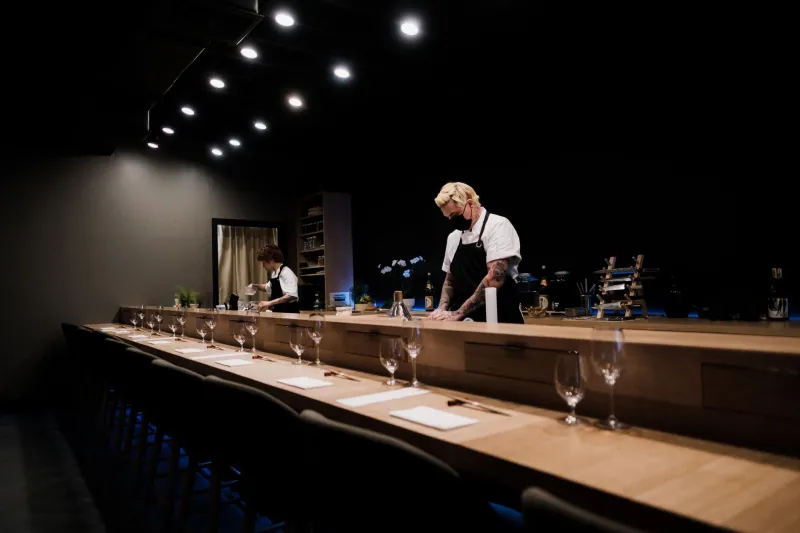
At a regular restaurant, a photo is a private act at a private table. At an omakase counter, it is public behavior in a small theater. The chef is often two feet away. The person next to you is trying to hear the description of the fish. The course has a lifespan measured in seconds, not minutes.
Chefs tend to care less about the phone itself than about what the phone disrupts. A quick, silent shot before you eat? Usually fine. A flash that bounces off the lacquer? Not fine. A five-minute styling session while the rice cools? That is the sushi equivalent of letting a soufflé fall.
The Free-Marketing Camp
Plenty of chefs actively welcome photos. A well-shot nigiri can fill seats. A tagged post can introduce a tiny counter to an audience that would never find it through a website. For a chef with 12 seats and no ad budget, diner photos are word of mouth with better lighting.
These chefs often have a simple rule: shoot it, then eat it. They may even offer a better angle, move a garnish, or warn you that the next course is coming fast. They understand that a phone in 2026 is part of the place setting. They just want it used with a little situational awareness.
The Distraction Camp
Other chefs see the camera as a competitor. Not because they dislike social media, but because the phone pulls attention away from the thing they spent all day preparing. They notice when a diner tastes the fish through a screen, when the rice sits while a caption gets rewritten, when a video light turns the counter into a tiny film set.
The most common complaints are not about photography itself. They are about flash, shutter sounds, standing up, leaning across neighbors, and treating the chef like a prop. One chef told me he can tell within two courses whether a diner is there for dinner or for documentation. The ones there for dinner tend to look up.
The Quiet No-Camera Counters
Some counters have quietly gone camera-free. Not all of them announce it, and not all of them enforce it evenly. The signals are usually obvious if you look: small signs, a line in the reservation confirmation, a chef who politely says, 'Please enjoy the food first.'
Why ban photos? Sometimes it is privacy for other guests. Sometimes it is pacing. Sometimes it is the chef’s belief that a course is meant to be eaten, not archived. A no-camera policy is not an insult to diners. It is a house rule, like no strong perfume or no speakerphone. The best response is not to negotiate. It is to put the phone away and enjoy the seat you paid for.
Ask Like You Mean It: Three Scripts
You do not need a speech. You need one sentence and a little timing.
- Before the first course: 'Is it okay if I take a quick photo of the food? No flash, no video.'
- If the chef is mid-slice: 'I’d love one shot of this course. When’s a good moment?'
- At a counter that seems camera-shy: 'Would you rather I keep the phone down?'
The key is asking before the phone is already up. A chef who feels ambushed will say yes through gritted teeth. A chef who is asked will often give you a better answer, including the best angle and the exact second to take it.
What You Miss Through the Screen
A phone does not just delay the bite. It changes what you notice. You miss the smell of the vinegar as the rice is pressed. You miss the chef’s tiny pause before the next piece, the one that tells you to slow down. You miss the temperature window that makes the first second taste different from the third. You miss the room.
That is the real trade. A photo can remind you of a great meal. It cannot replace the meal. The diners who get the most out of an omakase counter are not the ones with the best camera roll. They are the ones who know when to put the camera down.
The 2026 Baseline
If you want a simple rule set for American omakase counters this year, start here: flash off, shutter sound off, phone silent. Take one or two quick shots, not a full editorial shoot. Do not film the chef without asking. Do not stand up or lean across the counter. Eat the course while it is still the course. If the house says no photos, believe it the first time.
And if you are unsure, ask. A good chef will tell you. A great chef will appreciate that you cared enough to check.