Butcher Block, Eight Stools, One Rule: Inside America's Living-Room Omakase Parties
The dinner party is dead. Long live the dinner party.
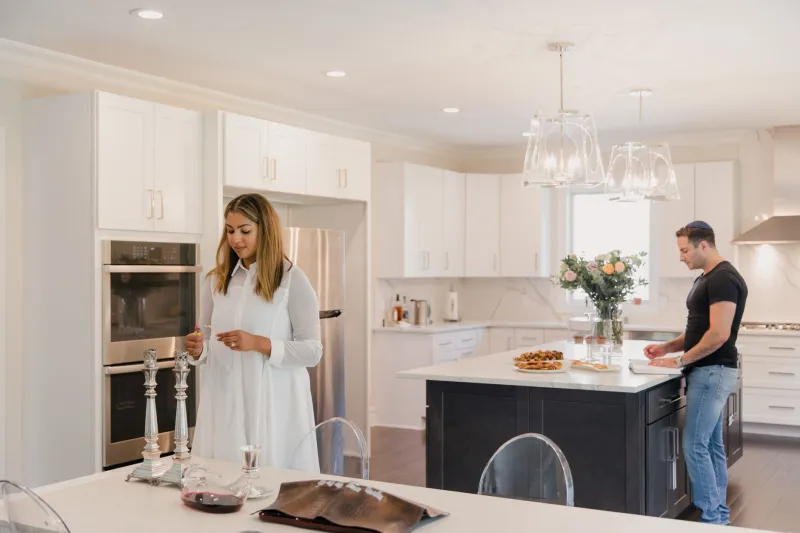
In a rented duplex in Portland, a software engineer named Dana hosts twelve seatings a year at a nine-foot butcher-block counter she built herself from a reclaimed bowling alley lane. Guests sit on bar stools. There is no menu. There is, however, a laminated card by the front door that reads: "You eat what the chef makes. Complaints cost extra."
Dana is not a professional. She's a hobbyist with a $400 knife, a rice cooker she talks about the way other people talk about their kids, and a fishmonger on speed dial. And she's part of a quiet movement of American home cooks trading potlucks for something far more ambitious: the at-home omakase party.
From Dinner Party to Counter Service
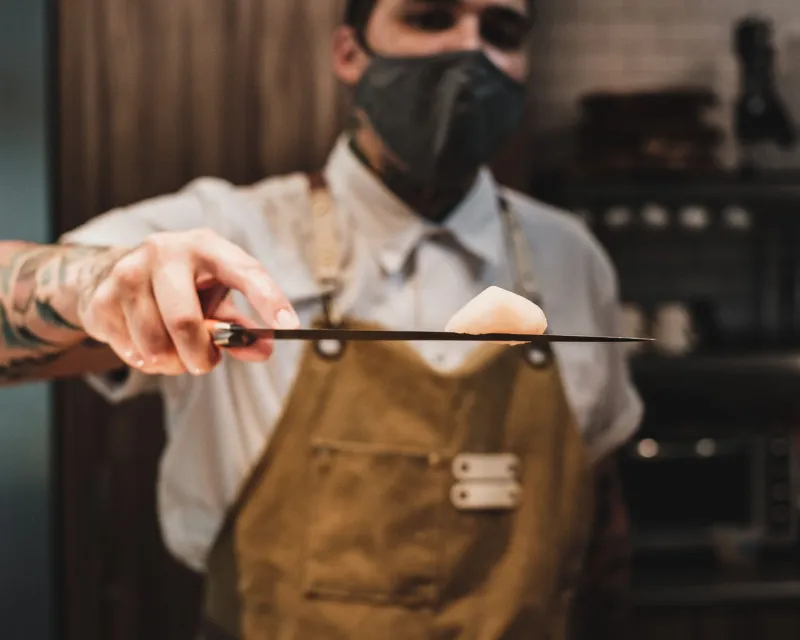
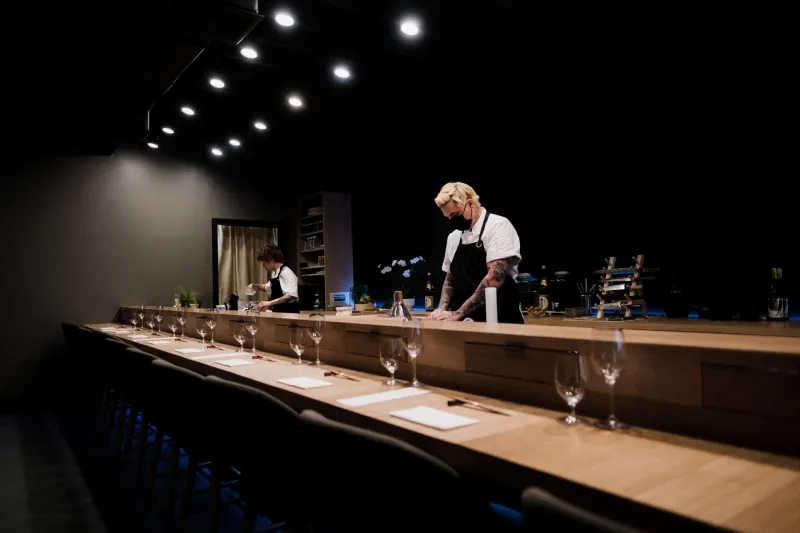
The concept is simple enough. Instead of serving guests family-style, the host becomes the itamae. Guests sit in a row — that part matters — and courses arrive one at a time, directly from the chef's hands, in the order the chef decides.
What sounds like a gimmick actually changes the entire social physics of a gathering. At a normal dinner party, conversation splinters into side pockets. At a counter, everyone faces the same direction, watching the same hands do the same work. The food becomes the shared subject. Nobody has to talk about their HOA.
"It's the only format where I can serve a hot course and a chilled course at the exact right moment," Dana told me. "At a table, everything shows up whenever it shows up. At the counter, I control time."
Control time. Remember that phrase. It's the whole game.
The Pro Who Brings the Counter to You
Not everyone wants to spend their Saturday night standing at a cutting board in their own kitchen. Enter chefs like Marcus Ito, a former sushi bar veteran in Chicago who now caters private "counter-style" dinners in clients' homes — and says the demand has tripled in two years.
"People got a taste of the counter during the pandemic and never let go," Ito says. "But they don't want to go back to a restaurant and sit with strangers. So I bring the counter to them."
Ito's setup travels in two insulated bags and a padded crate: a maple serving board that clamps onto the client's kitchen island, his own knives ("I don't touch anyone else's knives, ever"), and a small arsenal of garnishes. He insists on one non-negotiable before he accepts a booking.
"I ask how many guests. If they say twelve, I say eight. The counter only works small. I can't reach past the sixth seat, and the people at the ends get the cold, sad portion. Eight is the ceiling. Six is the magic number."
His pacing formula, which he shared freely, is worth stealing: something cold and crisp to open, something warm in the middle to reset the palate, the richest piece two-thirds through — never last — and a small, starchy finish so guests don't leave hungry. Roughly fifteen minutes per course. A full run takes about two hours, which is exactly the length of a good dinner and exactly the length before anyone gets drunk and sentimental.
Seating, Pacing, and Other Hard-Won Lessons
The amateur hosts I spoke with all made the same early mistakes, so consider this your shortcut.
The counter must face the cook. If guests can't see your hands, you've built a weird restaurant table, not a counter. Even a kitchen island with stools on one side works. A folding table with a tablecloth does not.
Cap the guest list at the number of stools you own. Borrowing chairs breaks the illusion. Eight stools, eight guests, done.
Prep like a caterer, serve like a magician. Everything that can be sliced, mixed, or marinated before guests arrive should be. The counter is theater, and theater falls apart when the chef is in the back room panicking.
One dish in hand, one in reserve. Serve a course, then immediately start the next one. Dead air at a counter feels twice as long as dead air at a table.
And then there's the soy sauce problem.
Protecting the Good Bottle
Every serious home omakase host has a story about the guest who drowned a hand-roll in grocery-store soy sauce, or worse — the guest who found the chef's good bottle, the one imported from Kumamoto, and treated it like Kikkoman.
Dana's solution: a small ramekin of the good stuff, portioned by her, refilled only when she decides. The premium bottle lives under the counter, behind a dish towel, in what her friends have started calling "the soy sauce vault."
Ito is blunter. "If a piece needs soy sauce, I brushed it or I seasoned the rice. If a guest reaches for the bottle, I gently tell them to try it as-is first. Nine times out of ten they come back and apologize. The tenth time, I just let it go. It's their mouth."
What the Guests Pay
Some hosts charge per seat — $40 to $80 is common, which covers fish and quietly funds the knife fund. Others, like Dana, use what she calls the dish-duty economy: guests wash up, and the host cooks. It's a barter system as old as the dinner party itself, just with better fish.
Either way, something interesting happens at the end of the night. Guests who arrived skeptical of being told what to eat leave talking about the kohlrabi course they never saw coming, or the mackerel they'd sworn off since childhood. The chef's-choice format, it turns out, works just as well in a living room as it does behind glass in Ginza.
The counter isn't dead. It just moved into the living room — and it brought the good soy sauce with it. Just don't touch the good soy sauce.