I Gave a Stranger My Dinner Decisions for Two Years. It Fixed My Cooking.
I used to be the person who opened a recipe, saw 'salt to taste,' and closed the laptop. Not because I couldn't season food — because I needed to know, exactly, how much. My spice drawer was alphabetized. My weeknight dinners were planned on a spreadsheet. My partner once described my meal prep as 'aggressively competent and completely joyless,' and honestly, that's fair.
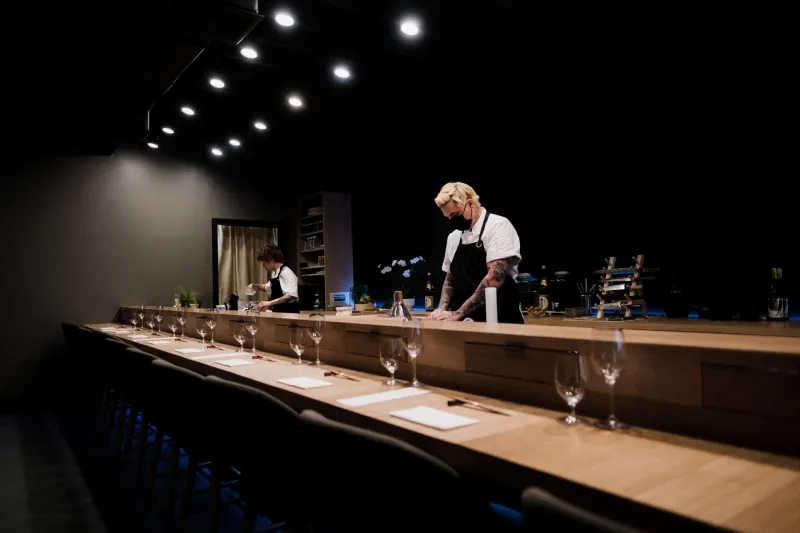
Then, about two years ago, a friend dragged me to a tiny sushi counter in a strip mall outside of Portland — eight seats, one itamae, no printed menu. When I asked what he recommended, he looked at me the way a librarian looks at someone asking where the fiction section is.
"You're already here. That's the recommendation."
I've been chasing that feeling ever since. And somewhere along the way, surrendering my dinner decisions to strangers with sharp knives rewired how I cook at home — and, less romantically but more honestly, how I get through the week.
The Tyranny of the Open Fridge
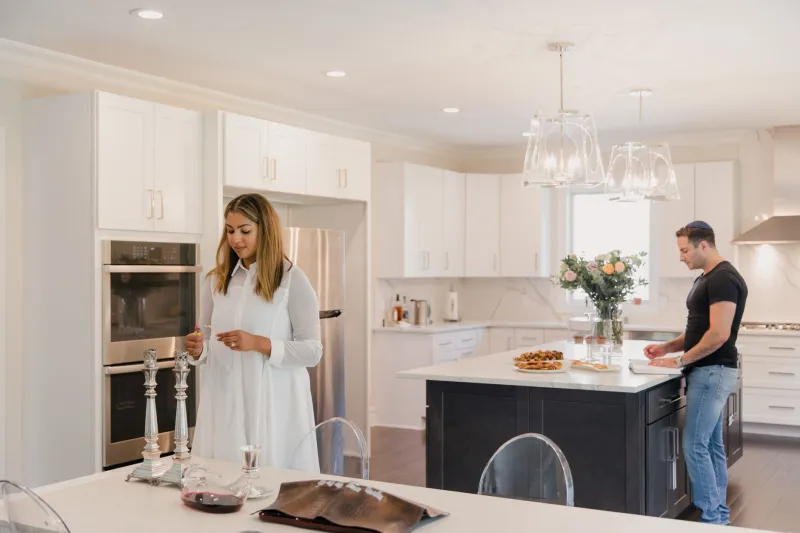
Here's the thing nobody tells you about being the household cook: the mental load isn't the chopping. It's the deciding.
Psychologists have a name for this — decision fatigue, the well-documented decay of judgment quality as you make choice after choice. Researchers studying judicial rulings famously found parole decisions shifting with the hours; anyone who's stood in front of an open refrigerator at 6:15 p.m. on a Tuesday already understands the mechanism intuitively. By the time you've decided what's for dinner, you've made forty micro-decisions since lunch, and the fridge is just one more cognitive tax.
Omakase — literally "I leave it up to you" — is the elegant inversion of that whole arrangement. You walk in. The chef decides. The only question on the menu is whether you have an allergy.
The first few times, it felt almost transgressive. No scanning Yelp reviews of individual dishes. No "substitute the cucumber roll." Just a plate arriving, and a person behind a counter watching your face to see what you thought.
What the Chef Is Actually Giving You
After maybe fifteen omakase meals across Seattle, LA, Chicago, and a memorable counter in a Honolulu alley, I started noticing something. The chefs weren't just feeding me. They were reading me.
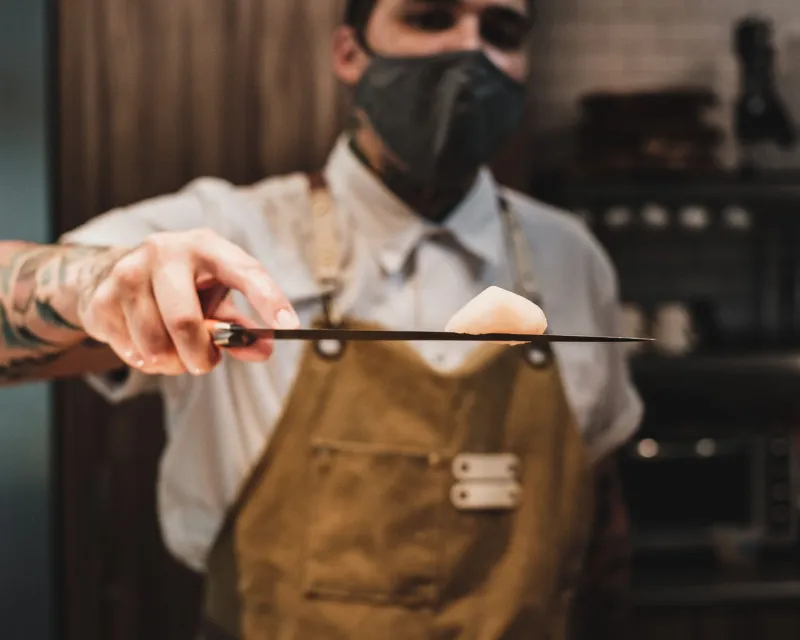
At a spot in Manhattan's East Village, the itamae served me a piece of saba — mackerel, cured, punchy — early in the meal. I made a face I didn't know I was making. He nodded, adjusted, and the rest of the progression got brighter and cleaner. Later, at the register, he said something I've thought about constantly:
"Most customers, they want the fish they already know they like. I watch for the one who will try the fish I like."
That's the transaction, when it works. You're not buying dinner. You're buying a chef's attention, pointed at you, unmediated by a menu. The menu, it turns out, is a firewall — it protects the kitchen and the diner from actually having to pay attention to each other.
Bringing the Surrender Home
The home-cooking conversion happened gradually. The first experiment was stupidly small: I stopped meal-planning on Sundays and instead bought whatever looked best at the farmers market or the fish counter, then figured dinner out that night. My spreadsheet wept.
What replaced it was a set of formulas instead of recipes — a template like "something marinated + something pickled + rice" that the week's ingredients could pour into. If the halibut looked incredible, halibut it was. If the snap peas were calling, snap peas. The structure was fixed; the decisions got outsourced to the produce.
A chef I interviewed for this site — a woman who runs a pop-up omakase out of a rented commercial kitchen in Austin — put the principle better than I could: "Recipes are answers. A good cook has questions. 'What does this ingredient want to be tonight?' is a much better question than 'what page of the cookbook am I on?'"
Three things changed in my kitchen once I stopped dictating:
- Waste dropped. I was cooking what I bought, not buying for what I'd planned. The wilted cilantro graveyard in the crisper drawer disappeared.
- Technique improved. Forced to improvise, I finally learned to taste and adjust instead of measuring. My salt instinct got scary good within about two months.
- Cooking got fun again. This is the one I didn't expect. Without a checklist, dinner became a puzzle instead of a performance review.
The Part Where It Leaks Into Everything Else
I'd love to tell you this stayed neatly in the kitchen, but it didn't. Once you practice saying "you pick" at a counter twice a month, the muscle generalizes. I let my barber choose the haircut. I let my partner plan our anniversary trip. I ordered the daily special at a taqueria in Oakland without asking what was on it.
Not every experiment landed — a perm-adjacent incident in 2023 will not be repeated — but the aggregate effect is real. There's a particular lightness in a day where you didn't have to be the decider for everything. Behavioral researchers talk about "choice overload" and the paradox that more options make us less satisfied; the omakase counter is the tastiest available rebuttal. Fewer choices, better dinner.
The control freak in me wants to be clear about the limits: this isn't about becoming passive. The itamae earned that trust through years of visible craft, and you can watch every move. Omakase isn't surrender to randomness — it's delegation to demonstrated competence. Big difference.
Try It This Week
If you want a low-stakes entry point: find a counter near you with a chef's-choice option and take the cheapest version. Twenty-five dollars and a "chef, whatever you're excited about tonight" gets you further than a hundred-dollar tasting menu you spent a week researching.
Then bring it home. Buy one ingredient that scares you a little, and let it decide dinner.
The fridge will still be there. The spreadsheet, too, if you need it. But the best meals I've had in two years — at counters and at my own table — all started the same way: somebody good said trust me, and for once, I did.