Sushi Counter Economics: What Really Changes Between a $50 and $500 Omakase
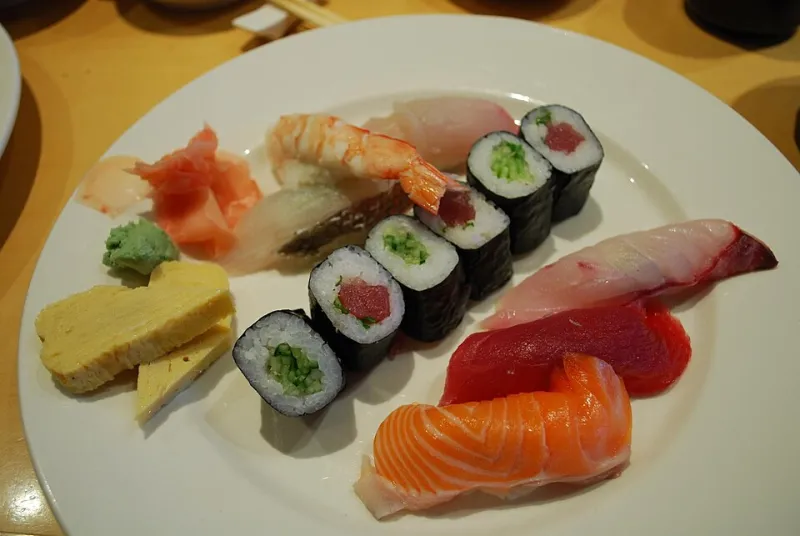
Photo: Alpha from Melbourne, Australia, CC BY-SA 2.0, via Wikimedia Commons
Here's a truth nobody in the sushi industry likes to say out loud: the difference between a $50 omakase and a $500 omakase is not 10 times the enjoyment. Sometimes it's barely twice. Sometimes — and this is the part that stings — the $50 meal is better.
But the price gap isn't arbitrary either. After years of eating at counters from a mall food court in Torrance to a nine-seat hideaway above a noodle shop in the West Village, I can tell you exactly where that extra $450 goes. Let's open the books.
What $50 Actually Buys You
At the lower end — think neighborhood sushi-ya, strip mall counters in the San Fernando Valley, lunch sets in Midtown that undercut every competitor within a six-block radius — you're getting fish that came through a distributor, not a specialist. That's not an insult. It's the same supply chain feeding half the sushi restaurants in your city.
Expect:
- Fish from a broadline distributor, often cut the day before
- Rice seasoned with more sugar and vinegar to compensate for less pristine fish
- A chef who might be doing tempura, teriyaki, and udon tickets simultaneously — omakase here means 'trust me' at a counter of six, not a two-hour performance
- 16–20 pieces with some repeats in style if not in topping
The ceiling here is real, but so is the floor. A good cook with decent fish can still make a mean piece of salmon nigiri. At $50, you're paying for a satisfying dinner, not a transcendental one. That's a fair trade.
The $150–$250 Middle Kingdom
This is where omakase in America actually lives, and where the value curve gets interesting. Places in this band — and every major US city has a few — are sourcing from dedicated Japanese importers, sometimes buying whole fish, often aging tuna or curing mackerel in-house.
What changes:
- Rice becomes the star. Chefs at this level obsess over it: blend of vinegars, temperature, rest time. If the rice is warm and loosely packed, you're in good hands.
- The counter format tightens. Eight to twelve seats, one seating flow, the chef narrating each piece.
- Sourcing gets specific. Toyosu market arrivals, day-boat fish from local waters, seasonal items like ankimo in fall or wild king salmon in early summer.
Honestly? For most people, this is the sweet spot. The jump from $50 to $200 is dramatic. The jump from $200 to $500 is subtler — and mostly about scarcity.
What the $500 Ticket Really Pays For
Top-tier omakase in the US — the Michelin-starred rooms in NYC, LA, San Francisco — is buying you three things: elite fish access, a master's technique, and time.
The fish is often purchased directly from Toyosu through a broker, sometimes flown in with the chef's name on the box. The itamae may have trained a decade in Japan before touching your dinner. And the pacing is unhurried: 20-plus courses over two hours, with peak-season ingredients appearing for a few weeks a year only.
You're also paying for the math of exclusivity. A room of eight seats, one seating a night, staff of five — the ticket price isn't gouging, it's arithmetic.
Red Flags at Any Price
Price doesn't guarantee integrity. Watch for:
- Too much sauce. Ponzu, truffle oil, and spicy mayo are fish camouflage.
- Warm rice that's mushy or dense. The single biggest tell of a lazy kitchen.
- A printed omakase menu identical week to week. Chef's choice should change with the market.
- Frozen-defrosted fish with any off smell. Trust your nose before your Instagram.
The Poor Man's Omakase: My Favorite Hack
Here's the move I recommend to everyone: skip the formal omakase reservation entirely and sit at the sushi counter during a slow service — a Tuesday at 5:30 p.m. Tell the chef: "Omakase, whatever you feel like, budget around $60."
Mid-tier sushi-ya all over the country — in Chicago's Ravenswood, Houston's Chinatown, the suburbs of New Jersey — will happily feed you chef's choice pieces at a la carte pricing if you ask. You get the trust-me spirit, direct conversation with the person making your food, and often off-menu items they're testing. It's the omakase ethos at kiosk prices, and it's how most sushi chefs themselves eat when they're off the clock.
The itamae decides. Your wallet survives. Everybody wins.