Listen Before You Bite: The Secret Soundtrack of a Great Omakase Meal
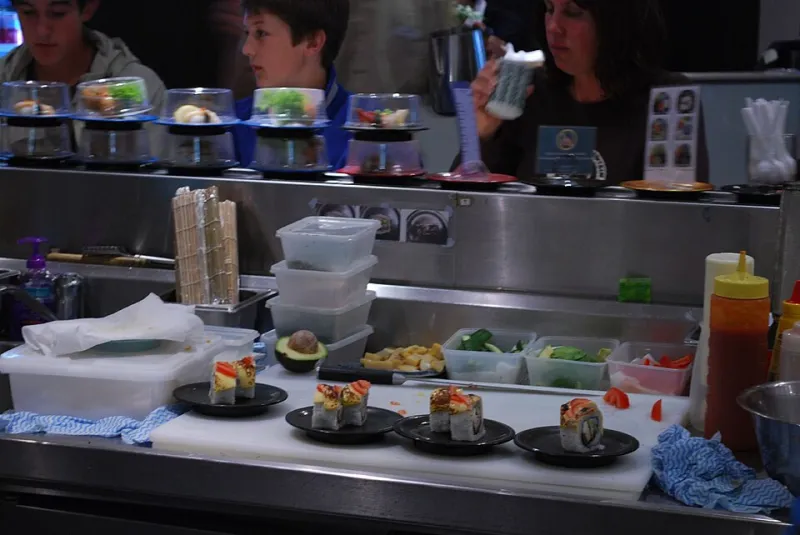
Photo: Alpha from Melbourne, Australia, CC BY-SA 2.0, via Wikimedia Commons
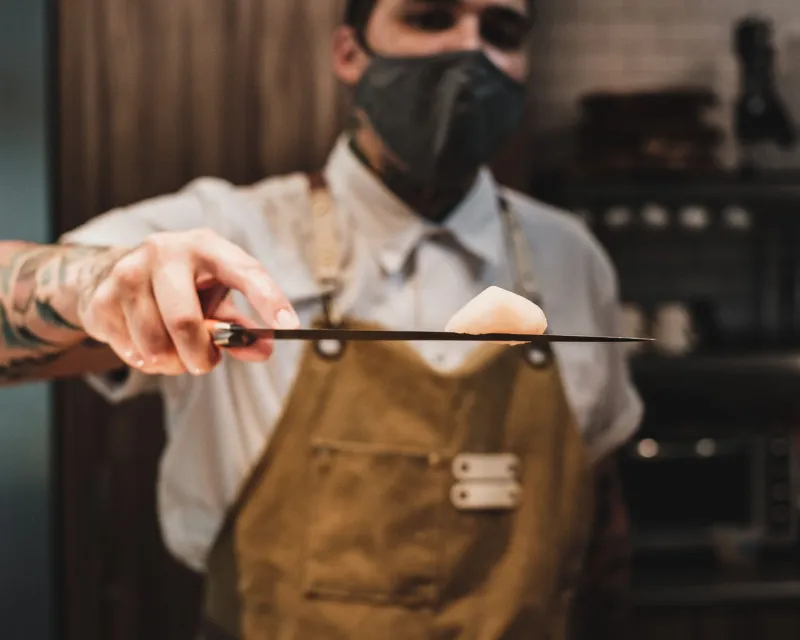
There's a moment at every good sushi counter that nobody puts on Instagram. The chef reaches for the knife. The room goes quiet — or at least, your attention does. And then you hear it: the soft, wet whisper of steel moving through a fillet of hamachi, one long uninterrupted pull.
That sound is the meal starting. Before the rice touches your tongue, before the soy, before anything — your ears have already been served.
Sound Is Seasoning
We talk constantly about how food looks. Plating, color, that perfect cross-section shot of a tamagoyaki. We're getting better about texture on the palate. But sound? Most of us treat it like background noise.
Japanese cooking doesn't. Walk through a serious kitchen in Tokyo or, increasingly, in New York or Los Angeles, and you'll notice cooks responding to audio cues the way a drummer responds to a click track. Is the tempura batter singing at a high, steady sizzle, or has it dropped to a dull fry? That difference tells you more than any timer. Is the dashi at a gentle shimmer or a rolling boil? One of those makes silky kombu broth; the other makes something bitter and sad.
Chefs in the omakase tradition — where the diner surrenders every choice to the person behind the counter — lean on sound because they can't rely on recipes. When you're adjusting for the fat content of today's fish and the humidity in the room, your ears become instruments. The food tells you what it needs. You just have to be listening.
The Acoustics of Trust
Here's something that surprised me when I started asking around: high-end omakase rooms are often designed with sound in mind, almost the way concert halls are.
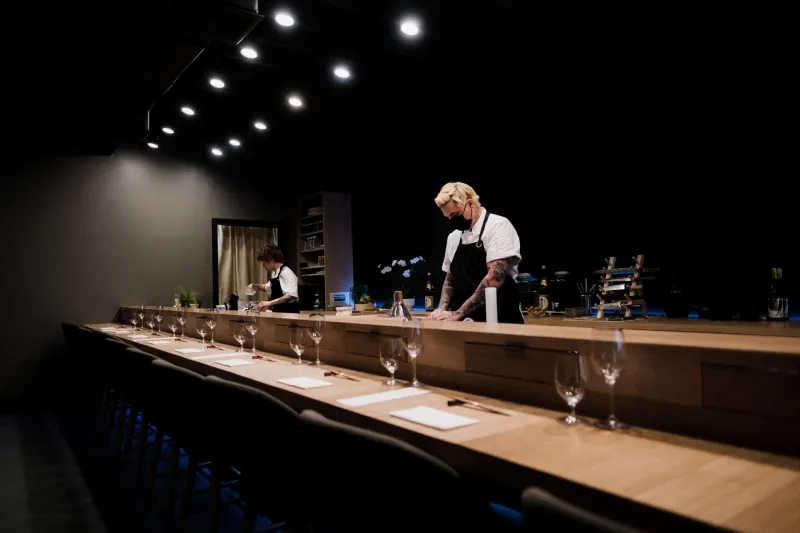
Think about the physical setup. A counter of hinoki cypress, which is subtly resonant. Limited seating — eight, maybe ten chairs — because every extra body adds ambient noise. No blaring playlist, no open kitchen clatter from three different stations. Some chefs will tell you they can hear a guest's chopsticks rest on the ceramic and know whether that person is relaxed or tense.
Why does this matter? Because omakase is a trust exercise. You've handed over the reins. A room that's too loud breaks the spell — you can't hear the chef explain where the uni came from, and the chef can't read the room. A room that's acoustically gentle keeps the conversation between you, the food, and the person making it. It's intimacy, engineered.
The flip side: some sounds are meant to reach you. The chef wants you to hear the oyster shell being tapped against the counter to check for freshness. That little percussion solo is a guarantee — this was alive minutes ago. In Japan, there's even a word-adjacent appreciation for incidental food sounds; the crackle and snap of food is treated as part of its character, not an embarrassment to be muted.
The Five Sounds of a Great Omakase
Want to train your ears before your next reservation? Here's the short list of what you should be listening for:
- The knife pull. A sharp knife through quality fish makes a long, clean, almost silent hiss. A dull knife makes a sawing sound — and sawing bruises the flesh. If your counter chef is sawing, order the cooked courses.
- The rice paddle. Seasoned sushi rice has a particular glossy, heavy sound when it's turned in the hangiri — like wet sand being folded. It tells you the rice is still warm and alive, not refrigerated into submission.
- The sear. When a torch hits a slice of wagyu or a scallop on binchotan, you want a sharp crackle, a quick flare, then quiet. That sound is the Maillard reaction announcing itself. If it just sits there hissing weakly, the surface is steaming instead of searing.
- The shell tap. Oysters and clams get rapped against the counter or a bowl. A solid, dense tok means the animal is full of liquor and tightly closed. A hollow knock is a warning.
- The crunch. When the chef tells you to eat the tempura shiso leaf immediately, part of the reason is that you're supposed to hear it — a brittle, glassy snap that fades as you chew. Fried food that doesn't audibly crunch has already started dying.
Bringing It Home: Cook Like Your Ears Are Hungry
You don't need a $300 omakase to play this game. Tuesday night works fine.
The single best habit you can build: turn off the podcast while you cook. I know. I love a good podcast too. But twenty minutes of actually listening to your pan will teach you more than a year of recipe scrolling.
Start with one experiment: the wagyu scallop sear, or honestly any scallop. Get your cast iron properly hot — it should sound hot before you even add oil, a faint shimmer of almost-silence in the pan. Lay the scallop down and listen. You want an aggressive, immediate crackle, like rain on a hot windshield. That sound is water violently flashing to steam while the surface browns. If you hear a weak little fizz, pull it, let the pan recover, try again. You'll calibrate your stovetop by ear in one session, and you'll never overcook a scallop again.
Same principle with anything fried. Tempura, chicken katsu, even a batch of gyoza getting their crispy skirt: the moment the sizzle drops an octave and slows down, moisture has won and you're boiling your food in oil. Pull it earlier than you think.
Even a humble pot of rice participates. That soft, rhythmic hissing near the end of cooking? That's the last of the water absorbing. It's your timer, more reliable than any appliance beep.
Your Ears Eat First
There's a reason the best meals feel theatrical even when nothing dramatic happens. It's not the plating or the lighting — it's that everything in the room, including the air itself, is communicating. Sound is the fastest path to anticipation. It's why your mouth waters at a sizzling fajita plate passing by at a Tex-Mex spot, and why the quiet pull of a knife at a sushi counter makes your pulse tick up.
The itamae knows this. The good ones compose with it.
So next time you sit down for a chef's-choice meal, do something a little strange: spend the first minute with your eyes half-closed. Listen to the kitchen work. You're not waiting for the food.
The food already started.