Read the Blade Before the First Bite: A Diner's Field Guide to Japanese Kitchen Knives
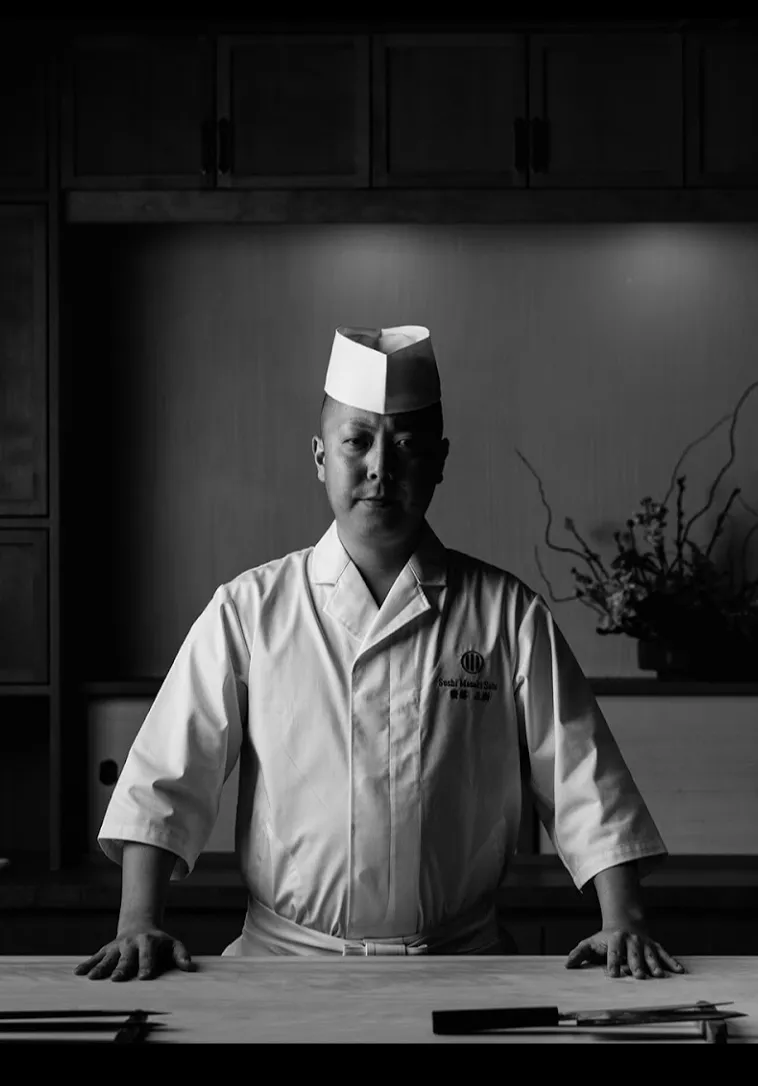
Photo: Sushi Masaki Saito Toronto Canada, Copyrighted free use, via Wikimedia Commons
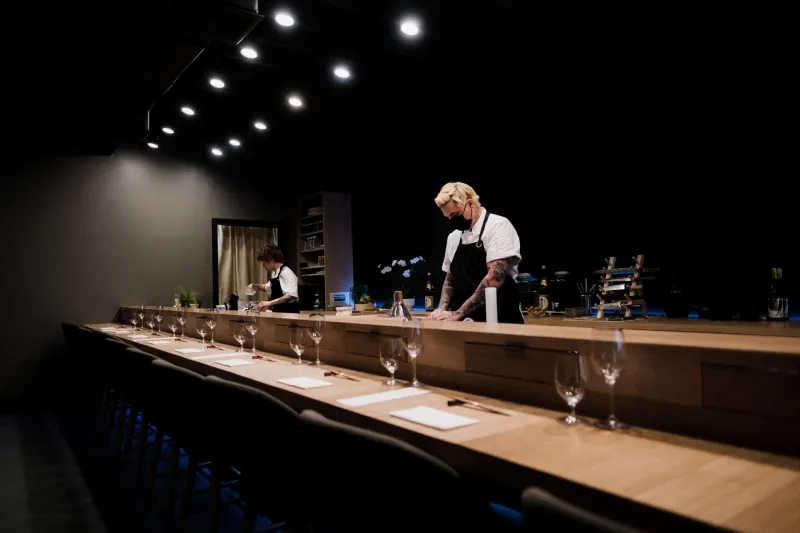
There's a moment at every good sushi counter that most diners scroll right past: the chef laying out their knives. It happens while you're settling into your seat, still deciding between the sake list and the yuzu spritzer. But if you're eating omakase — truly eating it, trusting the kitchen the way the whole philosophy demands — that knife lineup is the opening chapter of your meal.
At a traditional Edomae-style counter, a chef might own a dozen blades but use three or four in a given night. Each one is a specialist. Each one signals what kind of food, and what kind of care, is coming your way. Learn to read them and you'll never look at a sushi bar the same way again.
The Yanagiba: When the Fish Is the Point
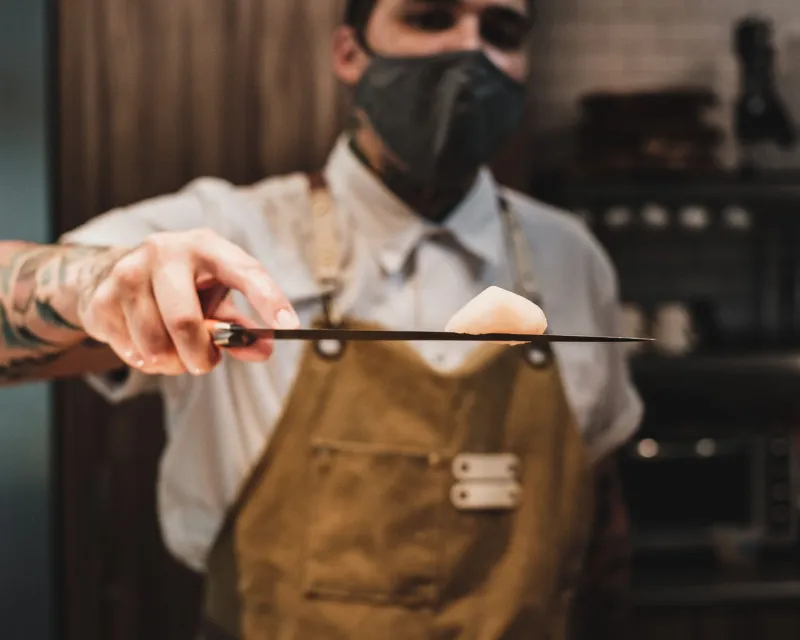
The yanagiba — literally "willow leaf" — is the long, slender slicing knife you've probably glimpsed in every sushi documentary ever made. It can run ten inches or more, and its edge is ground on one side only, in the Japanese fashion. That single bevel lets the chef pull the blade through raw fish in one uninterrupted stroke, leaving a mirror-smooth surface without tearing a single cell.
Why does that matter to you? Because when a piece of akami or king salmon hits your plate with a glossy, almost wet-looking face, that's the yanagiba's signature. A ragged cut from a Western chef's knife drags and shreds the flesh, which dulls both the texture and the flavor release. The yanagiba exists for one reason: to present the fish exactly as it is, no more, no less.
So when you see the yanagiba come out, the message is simple: the fish tonight is the star, and the chef intends to get out of its way.
The Deba: The Heavy Hitter That Promises Substance
The deba looks like it wandered in from a blacksmith's forge — thick-spined, stubby, almost cartoonishly robust for a Japanese knife. That heft is the point. The deba is built for breaking down whole fish: snapping through pin bones, cutting heads, filleting around the frame.
Here's the fun part for the diner. Spot a deba on the counter and you've just received a spoiler. Whole fish means structure — a course with bones in play, maybe grilled collar (kama), maybe a simmered dish, maybe something cured. It means the kitchen bought the fish whole, which is itself a quality signal: whole fish tells you more about freshness than a vacuum-sealed fillet ever could.
Plenty of the best counters in Los Angeles, New York, and Chicago make a whole-fish course the centerpiece of the mid-meal. When you see that chunky blade come down, lean in. Something with a little more soul than nigiri is coming.
The Usuba: The Quiet Flex of the Vegetable Course
The usuba is the blade most American diners have never heard of, and it might be the most revealing one on the counter. It's a thin, rectangular knife with a straight edge, reserved almost exclusively for vegetables — and specifically for the ornamental knife work of Kyoto's kaiseki tradition. Think paper-thin daikon sheets, carrots carved into blossoms, cucumber cut so fine you can read a menu through it.
An usuba appearing at a sushi counter tells you the chef takes the vegetable courses seriously. Not as palate-cleansing filler, but as a full expression of the meal. In kaiseki, the vegetable course is where seasonality lives — spring's mountain vegetables, autumn's mushrooms. A chef who reaches for the usuba is telling you they care about shun, the Japanese idea of eating each ingredient at its brief seasonal peak.
If you're dining in, say, a farm-driven spot in Portland or the Hudson Valley where the produce comes from down the road, an usuba on the counter makes perfect sense. The knife and the philosophy travel together.
One Cook, One Blade: Bringing It Home
You don't need a knife wall to eat — or cook — this way. But if the omakase mindset has crept into your home kitchen (and if you're reading this site, it probably has), a single well-chosen Japanese knife is a better investment than a 14-piece block from a big-box store.
Start with a gyuto, the Japanese take on the chef's knife, if you want one blade that does everything. If you cook fish often, a modest yanagiba or even a fugu-biki-style slicer will change how your crudo and sashimi look and feel. And whichever you choose, treat it like the itamae does: hand wash, dry immediately, hone rarely, sharpen properly. A Japanese knife isn't a tool you abuse and replace — it's one you maintain for decades.
The Counter Is Talking. Are You Listening?
Omakase works because it removes the negotiation between you and your dinner. But surrendering control doesn't mean going quiet — it means paying attention on a different frequency. The knives on the counter are part of that conversation. The long blade says precision. The stubby one says substance. The flat one says the garden matters tonight.
Next time you sit down at a sushi bar, skip the phone scroll for thirty seconds. Watch what the chef lays out. The meal is already telling you what it's going to be — you just have to read the blade.