The Last Course Tells the Truth: What a Chef's Tamagoyaki Says Before They Ever Say a Word
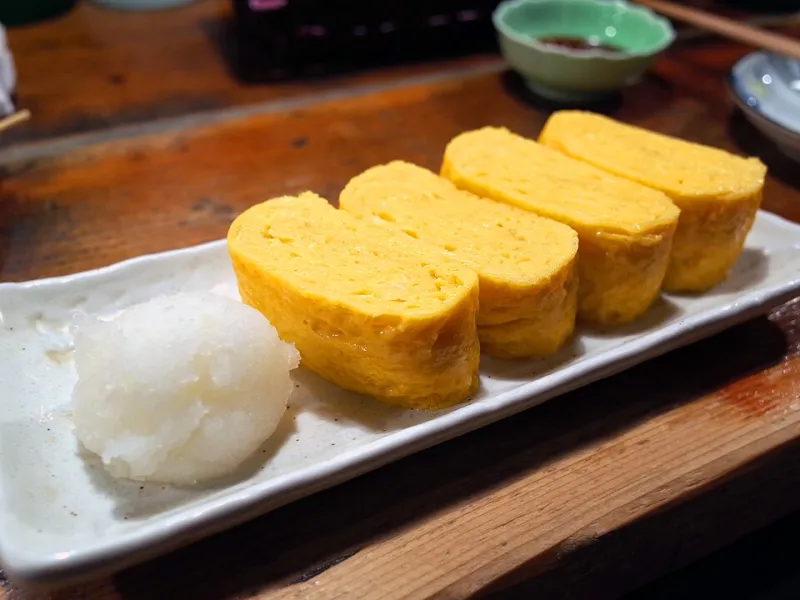
Photo: 極地狐, CC BY 2.0, via Wikimedia Commons
Ask a sushi veteran how to size up a new counter and they won't mention the tuna. They won't bring up the rice, either, even though rice people will tell you rice is everything. They'll tell you to order tamagoyaki — the rolled omelette — at the end of the meal, and to pay attention.
There's a saying in the sushi world, repeated in Tokyo and now in Los Angeles and New York: if a chef's egg is good, everything else will be too. It sounds like folklore until you think about what tamagoyaki actually demands.
Why the Egg Is the Final Exam
Most of the sushi menu is a collaboration between the chef and the ocean. The fish was swimming two days ago; the chef's job is to not ruin it. Tamagoyaki is different. Nobody hands you beautiful egg. You build it — from dashi, sugar, sometimes soy, sometimes mirin, always with a specific texture in mind — and the result is entirely, unmistakably yours.
That's why longtime regulars treat it as a signature. At Jiro Ono's famous Sukiyabashi counter, apprentices reportedly spend years, literal years, making egg before they're trusted with fish. One apprentice told the documentary crew behind Jiro Dreams of Sushi that he made over 200 attempts before being allowed to serve it. When he finally nailed it, he cried. The egg is not a palate cleanser. It's a diploma.
The Great Sweet-versus-Savory Split
Order tamagoyaki at different counters and you'll get quietly different answers to the same question: what is this dish for?
Tokyo-style (Edomae) tamagoyaki leans sweet — generous sugar, dashi-rich, often layered into a thick, custardy slab that's warm in the middle. It's the version most people know, and at sushi counters it often arrives lightly seared, sometimes brushed with soy, perched over rice as tamago nigiri.
Head to Osaka and the answer flips. Kansai cooks favor dashimaki's savory cousin — less sugar, more dashi, a looser, almost flowing interior that wobbles when it hits the plate. Kyoto takes it softer still. Every region swears theirs is correct. Every region is right.
For a chef, this choice is a statement of identity. A sweet, cake-soft tamago says one thing about where they trained; a savory, dashi-drenched roll says another. It's the one item on the counter where you're tasting philosophy, not product.
The Secret-Recipe Problem
Here's a fun quirk of sushi culture: many itamae treat their egg recipe like state secrets. Chefs who will happily explain how they age their akami will go vague when you ask what's in the tamago. Ratios get memorized, not written. Some adjust the sugar by season. Some add a splash of shrimp paste, or a whisper of yuzu, and would rather resign than tell you.
Part of this is pride — the egg is the chef's fingerprint. Part of it is practical: a counter's tamago takes years to develop, and it's the easiest thing for a competitor to copy. When I asked one NYC-based itamae about it, he laughed and said only, "The egg is the last thing I learned and the last thing I'd give away."
Making It at Home: The Beginner's Path
You don't need a decade of apprenticeship to make respectable tamagoyaki. You need a rectangular pan (a tamagoyaki-pan runs $15–25 online; a quarter-sheet pan's rounded cousin works too), and patience.
Ingredients (makes 2 rolls):
- 4 large eggs
- 2/3 cup dashi (cooled — instant dashi is fine, use half a packet)
- 2 teaspoons sugar (reduce to 1 for savory-style)
- 1 teaspoon soy sauce
- 1/2 teaspoon mirin
- Neutral oil for the pan
Method:
- Whisk everything together gently — you want it blended, not frothy. Foam makes lumpy eggs. Strain it if you're feeling serious.
- Heat the pan over medium. Oil it lightly with a folded paper towel. A drop of batter should sizzle on contact.
- Pour a thin layer of egg, tilting to coat. When the surface is mostly set but still wet on top, roll it away from you in two or three folds.
- Slide the roll to the far edge of the pan. Re-oil. Pour in another thin layer, lifting the existing roll so raw egg flows underneath it. When set, roll again.
- Repeat until the egg is gone — usually 4 to 5 layers. Press the roll gently against the pan's edge to square it off.
- Rest in the pan for a minute, then transfer to a bamboo mat or plastic wrap and shape while warm. Cool slightly, slice, and serve.
Beginner honesty: your first three attempts will look like abstract art. That's normal. The learning curve is the point — it's exactly why chefs respect this dish.
How to Read the Egg at Your Next Counter
Next time you're seated, order tamagoyaki last and give it a moment of real attention. Is it warm? (A good one usually is.) Does it have layers you can see, or is it a uniform brick? Is the sweetness balanced by dashi, or does sugar do all the work? Does it taste like someone's opinion, or like something from a foodservice box?
There's no universal right answer — but there is a right answer for you. And the chef who cares enough to get their egg right, every single service, is telling you something about everything else on the plate. The regulars already know. Now you do too.