Trust Fall at the Kroger Fish Case: My Five Nights of $12 Chef's-Choice Dinners
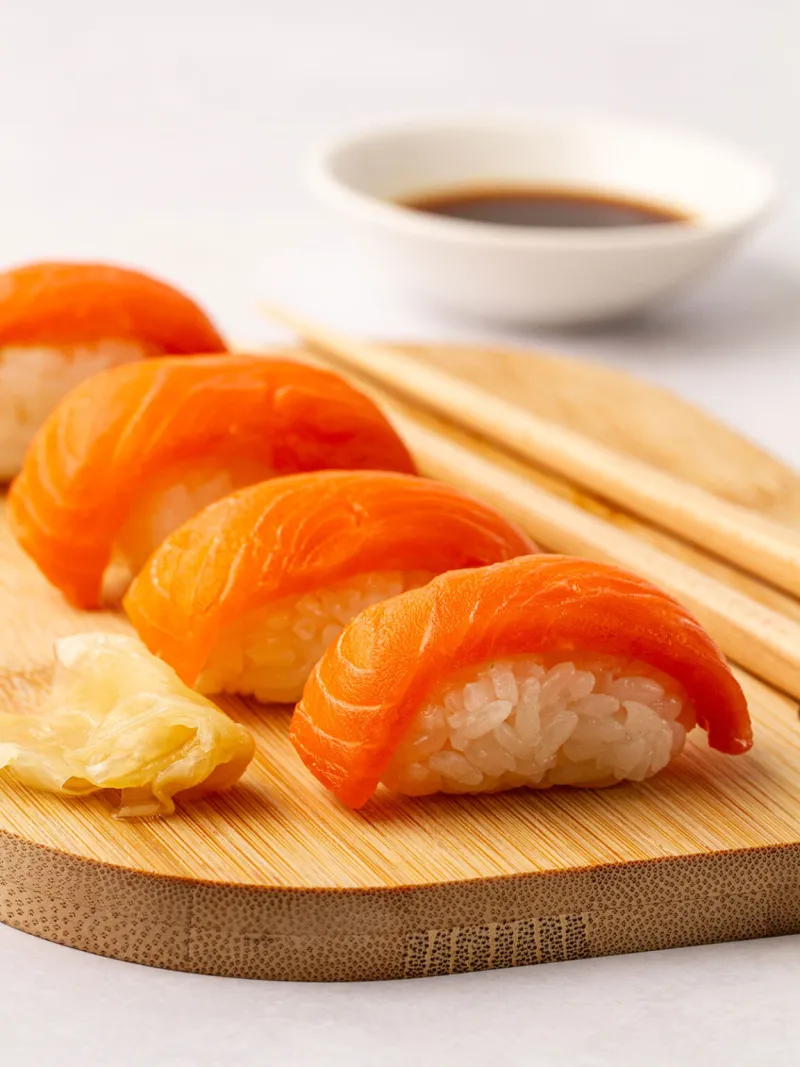
Photo: homemade salmon nigiri on plate with supermarket ingredients on wooden counter, via sushistaycation.com
There's a moment at every good sushi counter when you put down the menu and say four words: omakase onegaishimasu — chef, I'm in your hands. It's an act of trust. The chef decides. You eat.
So I wondered: what happens if you extend that trust to the least romantic fish counter in America? Not the Japanese market with the fluorescent-lit case of whole aji. I mean the grocery store. The Kroger. The Safeway. The Costco with the pallet of nori by the registers.
The rules I set: five dinners, one week, every ingredient from a standard US supermarket, under $12 per plate. No specialty runs, no mail-order yuzu. Could the omakase mindset — curate hard, waste nothing, let the best ingredient lead — survive a shopping cart with a rotisserie chicken in it?
Turns out it can. Here's the playbook.
The Mindset Shift: Curate, Don't Improvise
The biggest mistake home cooks make with "chef's choice" dinners is treating it like chefs' choice, plural — throw everything at the plate. Real omakase is ruthless subtraction. An itamae doesn't serve seventeen things; they serve one piece of fish at the exact right moment.
At the grocery store, that means walking past the fancy stuff and asking one question: what's genuinely good today? Sometimes that's the wild-caught sockeye. Sometimes it's the frozen block of ahi that's actually been flash-frozen on the boat — which, fun fact, is how a lot of sushi-grade fish travels anyway. Trust the freezer. The sushi industry always has.
The Shopping List, With Verdicts
Here's what a week's cart looked like, roughly $55–65 total, feeding two with leftovers:
- Frozen sushi-grade ahi cubes (Costco, ~$18/lb): The splurge. Worth every cent for two nights.
- Smoked salmon, plain style (any supermarket, ~$7): Underrated nigiri topping. Cold-smoked salmon over warm rice is 80% of a luxury experience.
- Nori sheets (~$4 for 50): The cheapest flavor bomb in the store. Toast them over a burner for ten seconds and they transform.
- Short-grain rice (look for Calrose or Kokuho Rose, ~$6 for a big bag): The California-grown workhorse of American sushi. This is not a compromise — this is the tradition.
- Rice vinegar, sugar, salt: Your entire seasoning strategy.
- Cucumber, avocado, one lemon: The supporting cast.
- Soy sauce and wasabi from the international aisle: fine. Nobody at your table is grading you.
Where to save: garnishes, fancy soy, single-use sauces. Where to splurge: the fish, always the fish. One great piece of protein beats five mediocre ones — that's omakase economics in a shopping cart.
The Five Dinners, Ranked
Night 1: Cold-smoked salmon nigiri with lemon zest. Wet your hands, shape warm vinegared rice, drape the salmon, grate a whisper of lemon over the top. Total cost per plate: about $4. I'd serve this to guests without apologizing.
Night 2: Ahi tataki with cucumber and soy. Sear the ahi cubes for fifteen seconds a side in a screaming-hot pan, slice, fan over cucumber rounds dressed in rice vinegar. The grocery store's frozen fish is actually ideal here — par-freezing makes the sear cleaner.
Night 3: The humble temaki night. Toasted nori, rice, whatever's left, rolled into hand cones at the table. This is the most omakase dinner of the week, oddly, because you become the itamae for your own household — handing each person their cone while it's still crisp.
Night 4: Salmon donburi. Leftover rice, leftover fish, sliced over the top with avocado and a soy-vinegar drizzle. Zero technique, maximum comfort.
Night 5: Tamago-ish omelet over rice. The sweet folded omelet — the dish that tells you everything about a sushi chef — simplified into a home version with sugar, soy, and a nonstick pan. It won't look like the counter version. It'll taste like you know what you're doing.
What the Week Taught Me
Omakase at a sushi bar isn't really about the fish. It's about a person paying attention so you don't have to. And that's transferable. The $12 dinner isn't a lesser version of the $150 one — it's the same gesture, scaled to your kitchen: look at what you have, honor it, serve it with intention.
The fish case at your local supermarket isn't Tsukiji. But the trust fall? That you can do tonight.