Two Bottles, Zero Labels: What Your Sushi Chef Is Actually Brushing on That Nigiri

Photo by Photo by Michael Brooks Jr. on Unsplash on Unsplash
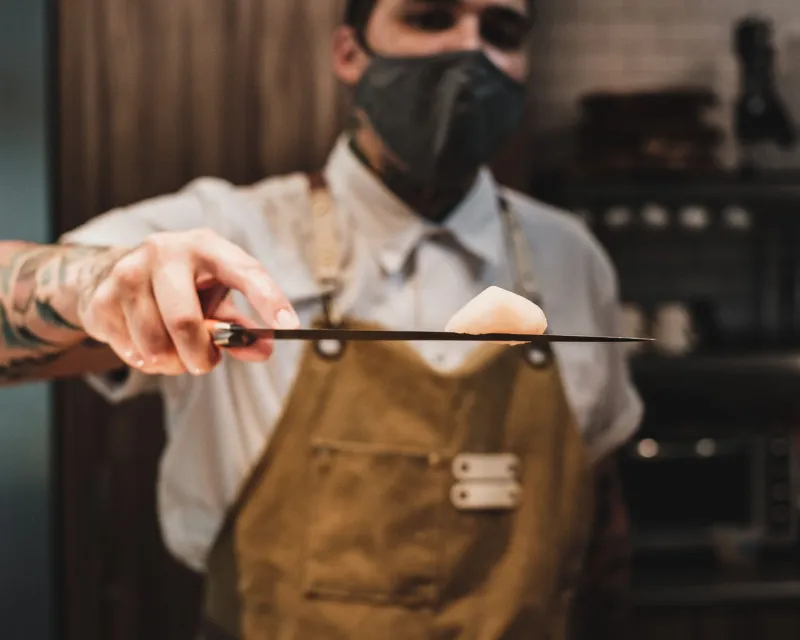
Watch a good itamae long enough and you'll notice it: the little pause before the fish hits the rice. A brush flicks out of a ceramic pot, a single stroke of something dark and glossy lands on the slice, and suddenly the piece in front of you tastes rounder, deeper, more finished than anything you'd make at home with the Kikkoman in your door.
That something is nikiri. And its quiet partner, sitting nearby in an unlabeled bottle, is usukuchi. Between them, these two sauces do more for your omakase than any truffle or gold flake ever could.
The Sauce You're Not Supposed to Ask For
Here's the first thing to understand: when the chef brushes nikiri on your nigiri, that's the seasoning. The soy sauce bottle on the counter? It's mostly there out of politeness.
"When I brush, I've already seasoned the piece," explains a chef friend who worked a counter in Los Angeles for a decade. "Dunking it again is like salting food someone already salted. Some fish — white fish, lean tuna — I want you to dip. Fatty stuff, dressed stuff? Hands off. Trust me."
Nikiri (literally "boiled and reduced") is soy sauce simmered with mirin, sake, and sometimes kombu or bonito, then aged. The cooking tames the harsh, salty edge of raw shoyu and leaves behind something rounder, sweeter, almost syrupy. It clings to fish instead of sliding off. It's the difference between soy sauce as a condiment and soy sauce as an ingredient.
Usukuchi: The Light One That's Actually Stronger
Now for the counterintuitive bottle. Usukuchi looks like soy sauce that's been watered down — pale amber, almost delicate. It's not. Usukuchi is typically saltier than regular (dark) soy sauce, with a thinner body and a flavor that stays out of the way.
That's the whole point. In Osaka and Kyoto cooking, usukuchi seasons without staining. Simmer it with daikon and the radish stays golden. Season tamagoyaki with it and the egg comes out soft yellow instead of mahogany. Remember that article about the tamagoyaki being the chef's tell? Usukuchi is usually why a great one tastes seasoned all the way through without tasting like soy sauce.
Chefs guard their usukuchi because it's often a specific regional brand — Yamasa's usukuchi from the Kansai region, for example, has no true American supermarket equivalent on most shelves. Some chefs blend it with dark soy to hit a house ratio they've tuned over years. Ask to see the back-of-house soy station at a serious sushi bar and you might see three, four, five bottles: different breweries, different ages, different jobs.
Why Chefs Hover Over the Pot
The aging part is where it gets obsessive. Nikiri isn't done when it's cool. Many chefs keep a batch in a ceramic container (the classic is a covered pot called a nikiri-nabe) and let it mellow for weeks or months, topping it off and re-seasoning as it gets used.
"Mine sits for at least a month before it touches fish," my chef friend told me. "Fresh nikiri tastes like a sauce. Aged nikiri tastes like a decision."
The heat is gentle and the additions are personal: some add a strip of kombu for glutamate depth, others a splash of dashi, a few go as far as a dried shiitake. There's no single recipe — there's only the chef's recipe, which is exactly the omakase spirit in liquid form. You don't get to customize it. You get to taste it.
The Weeknight Version (Yes, You Can)
You're not going to replicate a three-month barrel-aged nikiri in your apartment near the highway. But a 15-minute version will upgrade your homemade sushi night, your seared salmon, even a plain bowl of rice.
Quick nikiri, serves a sushi night for two:
- 1/2 cup good soy sauce (buy the better bottle this once)
- 3 tablespoons mirin
- 3 tablespoons sake
- One 2-inch square of kombu, optional but worth it
Combine everything in a small saucepan and bring it to the barest simmer — don't boil hard, you'll drive off the aromatics. Let it bubble gently for 10–12 minutes until it's slightly syrupy and coats a spoon. Fish out the kombu, cool it, and store it in a jar in the fridge. It keeps for weeks and gets better as it sits. Brush it on nigiri with a pastry brush, or drizzle it over a hot bowl of rice with a fried egg. Nobody needs to know it took one episode of television to make.
For usukuchi, check an Asian grocery — many US stores with a solid Japanese section carry Yamasa or a Kansai-style light soy. If you can't find it, use regular soy in smaller amounts; you'll lose some color-preserving magic but keep the seasoning logic.
The Takeaway
The next time a piece of nigiri arrives pre-glazed, skip the soy bottle. That glossy sheen is the chef's opinion, already stated. And if you're cooking at home, remember that the gap between forgettable and great often isn't the fish — it's the two bottles you never see.
The sauce knows. Now you do too.