Yes, Chef: Five Dishes I Doubted and the Lessons They Left Behind
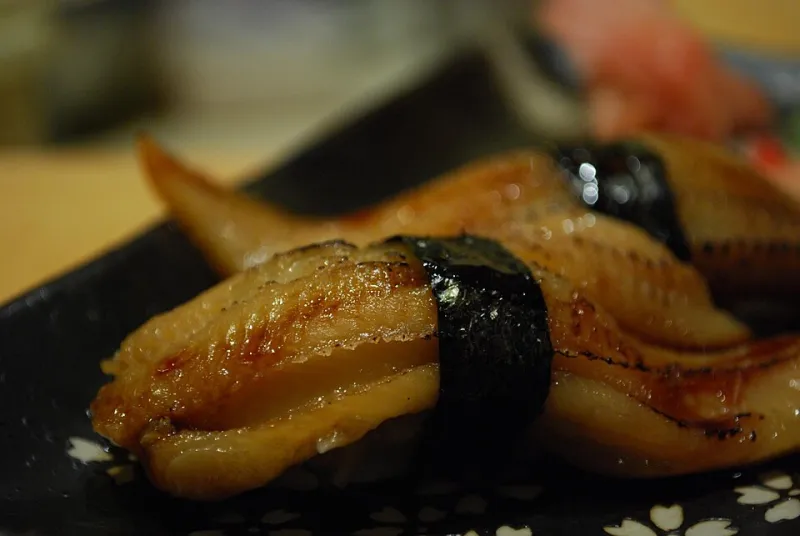
Photo: Alpha from Melbourne, Australia, CC BY-SA 2.0, via Wikimedia Commons
I grew up in a household where the extent of culinary adventure was adding a second packet of taco seasoning. My childhood dinner rotation had maybe ten dishes, and I liked it that way. So when I started eating at omakase counters — where the entire concept is you don't get to choose — I was, to put it mildly, out of my depth.
Omakase translates roughly to "chef's choice," and Americans tend to romanticize it as a luxury experience. What we gloss over is that it's also a trust exercise. The chef watches how you eat, adjusts what they serve, and occasionally slides something in front of you that your lizard brain actively wants to flee. Here are five times that happened to me, and why I keep going back.
1. Natto: The Bean That Fights Back
My first encounter was at a small counter in San Francisco, where the chef, a third-generation itamae, mentioned offhandedly that he'd spent time in Ibaraki, a region famous for natto — fermented soybeans famous for being, well, disgusting to the uninitiated. Sticky, stringy, pungent enough to smell before the plate lands.
He served it over rice with scallions and a raw egg yolk, watched me hesitate, and said the thing that changed how I eat: "In America you eat with your eyes first. In Japan we eat with our mouth. The eyes can be wrong."
He was right. The flavor is funky, nutty, almost cheese-like once you get past the texture — which is genuinely like eating tiny Velcro. I didn't fall in love. But I understood something: my reaction was trained, not natural. American kids don't grow up with fermented soybeans the way Japanese kids do. My disgust was a cultural habit, not a fact.
2. Shirako: The One That Took Real Courage
Shirako is cod sperm sac. There's no delicate way to write that, and honestly, the bluntness is part of the experience. It shows up in winter, usually lightly poached or in a ponzu, looking like — and this is the problem — a small, pale cloud.
The chef at a counter in Manhattan didn't explain what it was until after I'd eaten it, which I've decided was a kindness. And here's the thing: it was delicious. Rich, creamy, briny — closer to sweetbreads or a custard than anything I can compare it to. The gap between what it was and what it tasted like broke something open in my brain. I've since learned that plenty of adventurous eaters rank shirako among winter's greatest delicacies. My 2015 self would like a word with them.
3. Live Shrimp: When Dinner Is Still Moving
Kuruma ebi, served dancing — the shrimp arrives twitching on the plate, head still attached, body briefly skinned and arranged. It's a spectacle dish, and I want to be honest: I didn't enjoy it. The legs were still moving. I made a noise I'm not proud of.
But I ate it, and the shrimp was extraordinary — sweet, clean, tasting of actual ocean rather than the frozen rubber we get in most American sushi. The lesson wasn't about flavor. It was about proximity. Most of us eat meat that's been sanitized into abstraction. The counter doesn't offer that comfort, and sitting with the discomfort — literally watching what you eat — is its own kind of education.
4. Ankimo: The Foie Gras of the Sea
Monkfish liver, steamed and served with a dab of grated daikon and ponzu. This one was less about intimidation and more about preconception — I'd never have ordered "fish liver" off a menu, ever. At the counter, it arrived before I could object.
Silky, iron-rich, decadent in the way foie gras is decadent. It's now the first thing I look for when autumn menus drop. Which raises an uncomfortable question: how many other dishes have I been scrolling past my entire life?
5. Uni From the Source
I'd had uni before — the sad, brown, iodine-scented slabs that give sea urchin a bad name in the US. At a counter in Seattle, the chef served fresh Santa Barbara uni, and it rewired me. Sweet, custardy, tasting of kelp and cream. The difference between good uni and bad uni is the difference between a ripe peach and a canned one.
The Case for Saying Yes
Here's what five intimidating dishes taught me: picky eating, in America, is often less about taste and more about control. We order off menus because menus let us curate ourselves. Omakase removes the curation, and what's left is just you, a bite, and a question — do you trust this person?
You don't have to love everything. I didn't. But every dish I said yes to taught me something my comfort zone never would have: that texture is learnable, that disgust is often just unfamiliarity, and that a chef who's spent decades studying food probably knows something I don't.
The next time a plate lands in front of you and your instinct says no, try saying yes, chef instead. Worst case, you eat one bad bite. Best case, you find out your palate was bigger than you thought.